
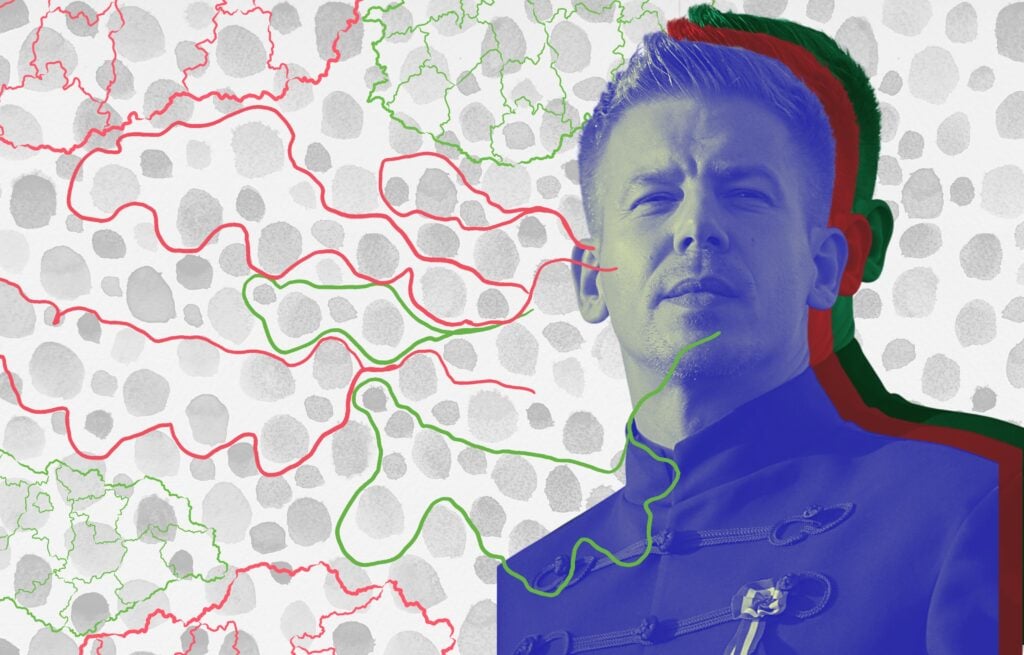
On April 12, 2026, Viktor Orbán’s authoritarian grip over Hungary came to an end. A new party, Tisza, won the elections with a two-thirds majority and a historically high voter turnout of close to 80%. This was a strategically executed, nonviolent means of defeating an authoritarian regime using elections as a window of opportunity.
Orbán’s party, Fidesz, was overwhelmingly defeated: Tisza gained 141 parliamentary seats, while Fidesz received 52. The longtime prime minister had no legitimacy to question the election results.
This brought about a cascade effect. Several business figures closely associated with Orbán are now rushing to rescue their wealth from Hungary for fear of being held accountable. In another case, one oligarch transferred ownership of his communications company to the state after authorities froze his accounts. Moreover, pro-government media have shifted toward more moderate reporting, and major leadership changes have begun. Of course, Orbán’s clientelist network still permeates Hungarian institutions and economy, and the country’s economic and geopolitical situation is volatile. But Orbán’s system—as we knew it—is imploding right in front of our eyes.
Orbán had been in power since 2010; Tisza emerged in 2024. Its leader, Péter Magyar, is a former Fidesz insider—not a career politician, and previously not known to the broader public, but someone who moved within the party’s orbit before breaking away. His insider status made his statements more credible to many. Magyar convinced people that the regime was more vulnerable than it looked, and that change was possible. He built a catch-all party, a broad coalition uniting ideologically, geographically, and ethnically diverse constituencies.
Slow media for fast times. Sign up for our newsletter.
Tisza, which is aligned with the European center-right political bloc, ran on a pro-European Union and pro-NATO platform that combines social inclusion with commitments to recover stolen assets, press freedom, judicial independence, and academia, and to expand access to education, healthcare, and housing. The platform explicitly fosters equality for Roma people and women, but stays largely silent on LGBTQ+ rights, and takes a conservative stance on migration in line with recent European trends.
A year ago I shared lessons from the Orbán regime’s 2010–2024 period. Now, an update: What can progressives learn from what happened in the last two years in Hungary?
It’s not about moving to the center. It’s about tackling polarization constructively.
In 2024, when Tisza emerged, Hungary was four years into an economic crisis. The COVID-19 pandemic, as well as the European Union’s suspension of funding to the country due to rule-of-law concerns and corruption, hit the economy hard. According to the government narrative, the money has been frozen because Hungary would not surrender to gender ideology, migrants, and war. From the beginning, Péter Magyar set out to shift responsibility back to the government. He anchored his campaign in the lived consequences of corruption and the clientelist state, and tangibly demonstrated how public services have been misappropriated or wasted.
He visited hospitals and childcare facilities to demonstrate the conditions on video to the broader public: crumbling bathrooms, broken elevators, and hospital rooms without air conditioning. But he was also there to provide ease to the suffering. Through the party’s foundation, he and his followers distributed charity to childcare facilities, school supplies to disadvantaged children, and firewood to low-income families.
This approach—exposing harm and alleviating it—reflected a deeper strategic logic. Magyar understood that Hungary’s political crisis was also a crisis of polarization, and he tackled it on two fronts at once. He drew people together across entrenched political divides by focusing on unifying policy issues (health care, childcare, education, public transit) that cut across partisan identities. In the meantime, he did not resolve the conflict. He redefined cleavages. The left-right cleavage gave way to a concrete choice about what kind of Hungary voters want: a pro-European, functioning, and humane Hungary against a corrupt, pro-Russian state.
Magyar never engaged in culture-war politics, consistently dismissing that terrain as government-engineered distraction. This was not a retreat to some imagined center, but a deliberate redrawing of the battle lines. Magyar translated the language of the rule of law and anti-authoritarianism into terms ordinary people could map onto their lives.
It’s not only about having an electoral strategy. It’s about defining political leadership.
Hungary was a competitive authoritarian regime in which formal democratic institutions (such as elections) existed but were abused, making the playing field so tilted that it was very difficult, if not impossible, to replace the ruling party’s incumbents. In this system, mathematically, Fidesz could only be beaten by a united opposition: either a coalition or one big party. For 14 years, the dominant strategy was the former: unifying the fragmented, ideologically diverse opposition parties to allow voters to choose a single opposition candidate in each constituency to run against Fidesz’s candidate. In 2024, Tisza did not follow this approach. It strived for hegemony.
The immediate opportunity for the rise of a new political force came when the president of Hungary granted clemency to the deputy director of a state-run childcare facility jailed for assisting a pedophile. The scandal triggered a large anti-government demonstration organized by social media influencers, drawing between 130,000 and 150,000 people. However, no opposition parties had enough credibility or skill to translate protest energy into political capital because the opposition bloc was associated with old political elites. Péter Magyar stepped into this vacuum and gave his first media interview to an opposition outlet, sharing insider accounts of how Fidesz operates. And thus, the story of Tisza began.
Before 2024, civic organizations were either absent from efforts to shape the political opposition, or they supported the strategy of a unified opposition running against Fidesz. On one hand, this led to various social groups fighting their own battles with the government, never quite coalescing into a unified movement, despite attempts.
On the other hand, it led to multiple parties’ half-hearted efforts to build a united front, which ultimately eroded electoral trust. Certainly, civic organizations cannot win elections. They can move heaven and earth and achieve nothing if politicians pretending to be progressives or leftists have lost credibility or cannot lead. So, holding the opposition accountable for inauthentic leadership and elevating a credible opposition are big parts of the game. If not progressives, others will do it—and they may come from the center of the political spectrum, as happened in Hungary.
Striving to renew the opposition, Tisza had no other choice but to recruit candidates largely from outside politics. The party issued an open call for people who wanted to run for office or work in a democratic state apparatus. Thousands applied. They were vetted and selected through a process akin to open, merit-based hiring. The party organized a primary to select the final candidates representing the 106 constituencies. In parallel, hundreds of policy experts, including Roma experts, formed working groups to build the party’s platform and to prepare to govern.
It’s not about preaching in your communication bubble. It’s about meeting and listening to new people.
Hungary was not only a competitive authoritarian regime but also an informational autocracy. Orbán used media buyouts by government-connected businessmen to gain an estimated 80% control of the Hungarian media market, which contributed significantly to maintaining voter compliance. Magyar beat this media machinery by speaking directly to people. In the two years leading up to the election, he was constantly on the road, visiting 700 of the 3,155 Hungarian settlements (villages, towns, and cities), sometimes more than once. At many of these visits, he gave a long speech, followed by hours of Q&A with the audience, always live-streamed.
It was the Hungarian people being unfiltered on YouTube, sharing their anger, pain, and suffering with a relatable politician who gave genuine answers. Magyar paired that with a very active, creative presence on his personal social media. There is a term in organizing called a “listening campaign,” a method where organizers and grassroots leaders hold hundreds of one-to-one conversations to understand what matters to people and how they see the world. Magyar did that in turbo mode.
As a result, Magyar and his new party not only cleared the opposition field, they also aimed to convince Fidesz voters to defect from the regime, while demonstrating to the politically inactive or undecided that there was a real alternative.
It’s about organizing and mobilizing—but for a new historical bloc.
Before 2024, the main vehicle of dissatisfaction in Hungary was issue-based protests, resulting in a fragmented voice of dissenting constituencies. Pro-democracy actors—civic organizations, journalists, people from various professions, parents, youth, Roma, LGBTQ+ people—ensured that the public arena in Hungary remained “open” for expressing dissent and demands, and the public had access to professional analysis and journalism.
Local communities received support in standing up for change, and activists were given training and legal protection. It was more than simply maintaining the status quo—these actors introduced democratic innovations such as civically-organized primaries, created democratic enclaves, and uncovered the regime’s injustices. At the same time, there is a huge difference between resistance and fundamental change.
When Magyar entered the scene in 2024, he convinced people there was a real opportunity for change. This galvanized his followers into grassroots activism, activating dormant organizational structures or drawing existing ones under the party’s auspices. Tens of thousands formed the so-called “Tisza Islands” across the country, bringing together diverse constituencies, including Hungary’s largest minority, the Roma community.
This fast-growing network of reportedly more than 2,000 local, largely autonomous groups aligned with the party. They organized local talks, supported people in need, ran party-designed surveys, mobilized for local and national rallies, distributed campaign materials, disseminated the party’s newspaper, and supported the election campaign. It was like the Obama moment in the US in 2008. The party was eventually able to draw on 50,000 volunteers, and reached literally millions of rural households repeatedly.
Eventually, the party mobilized 350,000 to 500,000 people to its pre-election rally (which is between 3.5 and 5% of Hungary’s population). Lacking any other structure, the party’s strength depended on the cooperation of this base.
On April 12, 2026, this new historical bloc—this new alignment of groups joined politically and culturally—reinforced their belonging to the EU, and voted for democratic renewal with an overwhelming majority, with Tisza sending 44 women (one third of Tisza’s elected representatives) and four Roma candidates to the parliament. As Hungary re-democratizes, these kinds of politics may now provide a chance to enact a more inclusive democracy and open space for progressive parties and movements to advance their agenda.
Social struggle is a never-ending competition over alternative visions of society. The Hungarian case reinforces that fundamental change requires building a historical bloc with the power to govern, which in turn requires building new coalitions and finding a credible political leadership.
Did you enjoy this article?
Becoming a member is the best way to ensure we keep publishing articles that meet the moment. Memberships start at just $5 a month and come along with a variety of other perks; join us today.