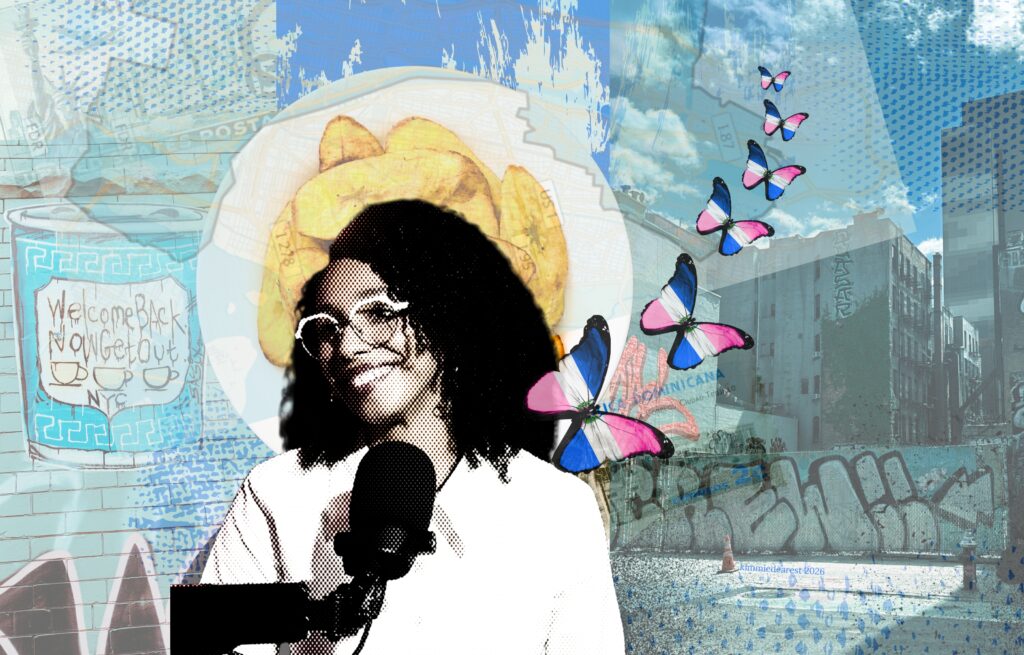
On June 24th, New York City cemented itself as a progressive bellwether in the midst of the far right’s march toward global domination. It was a test of the strength of Mayor Zohran Mamdani’s first year in office; all candidates backed by the mayor swept the primaries, propelled forward by campaigns that centered the plight of New Yorkers through a rejection of establishment politics.
One victory, that of 32-year-old Darializa Avila Chevalier, a Dominican-American Muslim and Columbia University Gaza solidarity encampment activist, over the five-term incumbent and chair of the Congressional Hispanic Caucus, Adriano de Jesús Espaillat Rodríguez, surprised many in New York’s 13th Congressional district. But not Mamdani, who said, “Last June was not an anomaly. It was not an aberration. It was the beginning of a new kind of politics.” Espaillat was deemed untouchable, a sure-bet winner. But to loosely quote Antonio Gramsci, the old guard is dying and a new one is struggling to be born.
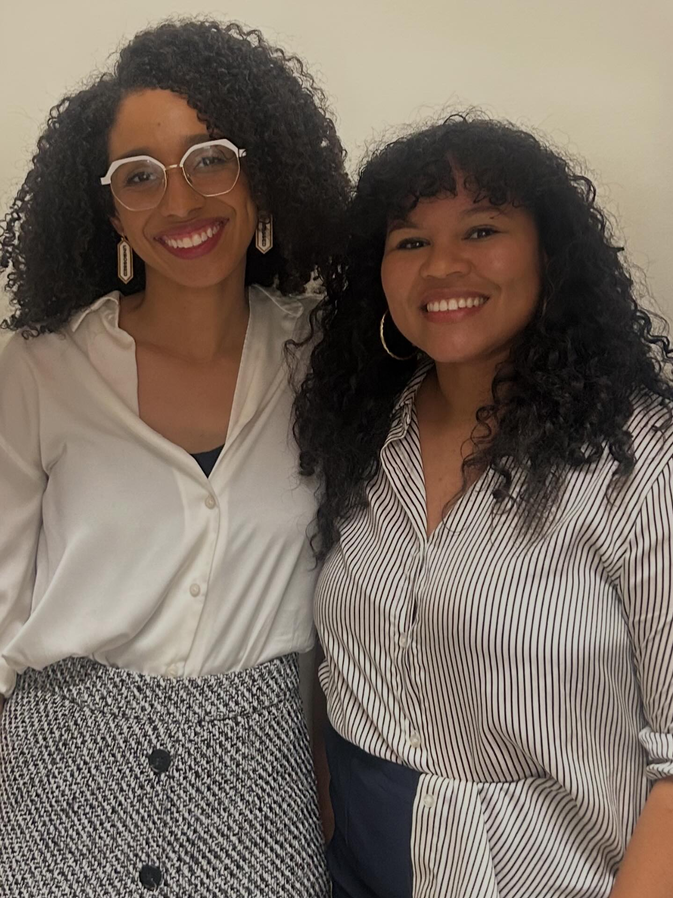
For Saudi and me, two Dominicans living in the diaspora, this race provides us with a space to reflect back a truth we have known for some time: Dominicans are in a generational tug-of-war to redefine our identity.
Many in our generation have had to reconcile with nationalism’s contradictions, have studied the Black radical tradition and our legacy within it, have been marginalized in our families and communities, and sometimes even experienced violence for our advocacy in the past. Generations of Black Dominicans have fought to be visible in a state that has forcibly disappeared us from the archives. And thanks in large part to the internet, the visibility of Black Dominicans in music and pop culture, as well as the cultural similarities between the Antilles and the broader African diaspora, it is no longer possible for the state to have sole control over how Dominicans are perceived, nor dictate what future we can or cannot believe in, or fight for. This primary brought these truths to light.
Slow media for fast times. Sign up for our newsletter.
For generations, Dominican identity was whatever the Dominican state said it was.
Darializa won because of her progressive policies. From her Day 1 Agenda, fighting for housing for all and redirecting taxpayer money into local communities and schools, Avila Chevalier led a people-first campaign with humility. Her platform refreshed Espaillat’s promise in his 2016 victory–one of a public servant who will fix New Yorkers’ problems, to use their role in government to support the people, not the political machine. She focused on affordability, housing for all, abolishing ICE, and a clear divest-invest framework of babies, not bombs. In many ways, it was also a referendum against Espaillat, a candidate with deep ties to the real estate lobby displacing his constituents and the pro-Israel lobby.
Let’s look at the numbers: United Democracy Project, AIPAC’s super PAC, disclosed that it spent $650,000 in May on BOLD America, a shell PAC that has spent at least $2.8 million to oppose Avila Chevalier. Despite his origins as a formerly undocumented Dominican immigrant, Espaillat’s campaign received funding from ICE contractors. Meanwhile, Avila Chevalier refused AIPAC money and was staunchly, loudly, and proudly anti-Zionist. She rejected corporate PAC money and crypto money and broke records in the district for individual small-dollar donations in NY-13.
Avila Chevalier will now lead a district of almost 800,000 people who are predominantly Black and Latine, with a per capita income of $37,970. A large portion of this district is where you’ll find the bulk of Dominicans in the diaspora; once making up the district’s immigrant population, they have declined by 13% since 2021 under Espaillat’s watch. And they are characters in this Cinderella story, in deeply contradictory ways.
The Politics of Hatred as a Defining Narrative
For generations, Dominican identity was whatever the Dominican state said it was. Despite the original peoples of Hispaniola–the island that contains the Dominican Republic and Haiti–being the first to be cleaved apart, genocided, and trafficked in a centuries-long colonial project, the Dominican state highlights Spanish culture and mestizaje while denigrating the long history of rebellions and maroonage in its official historical narrative. Dominicans in the diaspora are pushing back against the narratives that frame all Dominicans as being in denial of their Blackness. The “I no Black, papi, I Dominican” meme resonates because the Dominican state, for over a century, has done horrific things to erase Black populations in the country, especially Afro-Dominicans, Dominicans of Haitian descent, and Haitian immigrants. “I no Black” reflects the official state narrative of the Dominican Republic, one that enacts policies, narratives, and worldviews that are not only ethnonationalist and xenophobic, but false. This worldview is part of a legacy of state-sanctioned disinformation that often spills out into the real world, and it was deployed in NY-13 against progressive candidates with the grit to pose a threat to Espaillat’s reign.
With a co-sign from Espaillat’s camp, both authentic and inauthentic accounts representing Dominican nationalists, fascists, Dominican MAGA, and anti-Muslim and routine disinformers, along with conservative media and influencer darlings in the right-wing ecosystem, engaged in an internationally coordinated online smear campaign against Avila Chevalier, mirroring the tactics used against José Francisco Peña Gómez in the 1990s. Where his presidential race was met with false claims that he would unify both sides of the island and enable a “Haitian invasion,” similar tactics have evolved for the 21st century. These accounts seeded birtherism conspiracy theories that used “Haitian” as a pejorative against Avila Chevalier and that she is “not a real Dominican” because of her last name, because she identifies as a socialist, and because of since-deleted tweets that exposed her critiques of the United States and the Dominican Republic.
These messages were laundered with consistent right wing talking points that are often used to derail progressive candidates who are focusing on working-class issues, by claiming they are Marxists, communists, or terrorists, when in reality, they are speaking plainly and making sensible, responsible policy a reality for communities that have been undermined historically. Look at any of the replies within the content about or by Darializa Avila Chevalier, and you will see the politics of hatred plain as day.
Rusking Pimentel, a staffer at Espaillat’s Congressional office, accused Avila Chevalier of working with Mayor Mamdani to “replace Dominicans in Washington Heights with Muslims and Haitians” in a Spanish-language interview on the podcast Entre Líneas. Translating his remarks, he postulated that Mamdani’s goal is “to change the demography of Washington Heights, that Washington Heights no longer be a bastion of the Dominican community, that it will rather become a bastion of the Haitian, Muslim community allied to him.” No mention of the fact that Dominicans are leaving their ethnic enclave of the Heights because they have been priced out under Espaillat’s tenure as Congressman. Pimentel dug deeper still, his interview with “Las Exclusivas de José Peguero” on YouTube, where he relied on birtherism to sow doubt on Avila Chevalier’s ethnicity. Pimentel’s reframing of the Great Replacement Theory to spread pro-Dominican nationalist and anti-Haitian sentiment earned him unpaid leave, according to a staffer.
Anti-Muslim rhetoric, speckled throughout the smear campaign, levying “Haitian” as an insult and a disqualifier, and conspiracy theories were racist and bigoted attacks meant to influence the vote of Dominicans and Spanish-speaking populations in the district.
This isn’t the first time Espaillat has endorsed this type of behavior. Divisiveness and identity politics are part and parcel of his campaign strategy, including the one that won him his Congressional seat in the first place. From racist rhetoric to antagonistic on-the-ground threats and stalking from volunteers from Espaillat’s camp, Avila Chevalier was brigaded in the last weeks of the primary, with accounts supporting the incumbent spreading disinformation and discord in the comments on her social media accounts. Once confronted in public, Espaillat labeled these tactics “aggressive” and asked his campaign to “tone it down.”
The generational and class split was also evident in this race, with older voters, especially older Dominicans, backing Espaillat because he was familiar or because he represented their ethnicity and nationality. Beyond exit polling, we have to be clear in our analysis of why. The nation’s ongoing shift to the right can be traced back to the conservative lineage of dictators and strongmen figures like Rafael Trujillo and Joaquín Balaguer. These conditions shape the politics of the Dominican diaspora, but we can say we are no longer resigning ourselves to a perceived inevitability.
The minute deeply bigoted remarks were repeated in mailers and ads, in the news on the island, in podcasts, and in the local paper uptown, we lost the plot. Rather than discussing platforms, activists and organizers were forced into rapid response to redirect these attacks into a get-out-the-vote strategy. Anti-Muslim rhetoric, speckled throughout the smear campaign, levying “Haitian” as an insult and a disqualifier, and conspiracy theories were racist and bigoted attacks meant to influence the vote of Dominicans and Spanish-speaking populations in the district. These wedges were manufactured to suppress the vote and are a textbook example of how and why manipulation campaigns force our communities to lose out on policies that are net beneficial to them.
From a Wedge to a Bridge
While nationalism and identity became a weapon, community members used it as an opportunity to send out a joint letter, demanding that all candidates denounce all forms of racism, sexism, and xenophobia. That’s why, on June 20th, Dominican Women’s Coalition, the National Dominican Women’s Caucus, and Mami Chula Social Club organized a town hall to bring all candidates running in NY-13 to their constituents for the first time this election cycle, and ensure it was bilingual so that all residents could have the opportunity to hear directly from the candidates and to ask questions about the issues they cared the most about. These groups leveraged their soft power–connections and trust–to support rapid-response efforts and accessible, tangible civic engagement. Avila Chevalier and Oscar Romero, a candidate with extensive experience as a public servant, attended. Espaillat declined the invitation.
For Claudia Mendoza, founder of Mami Chula Social Club, this election was another opportunity to spearhead community-first conversations between candidates and their would-be constituents. “We hosted conversations with candidates like Zohran Mamdani before many people in our neighborhoods even knew who he was. One lesson I’ve learned over the years is that if you’re not at the table, you’re likely on the menu. So we’re not waiting for an invitation.” Mendoza, who is part of a broad, multigenerational coalition, shows that, despite the state’s narratives, the Dominican community is not homogeneous in its politics or identity.
When discussing her hopes for this and future elections, Mendoza shared her belief that communities deserve more than a transactional relationship with their elected leaders. “The strongest campaigns aren’t simply built around compelling policy ideas; they’re built on years of listening, showing up consistently, and earning trust before asking for votes. For anyone who hopes to represent communities like ours, my hope is simple: spend time here, building coalitions with the people long before the election. Listen more than you speak. Understand that there are people and institutions here who have been doing the work on the ground, so build with them. And remember, people closest to the problem are closest to the solution, but furthest from power and resources.”
We need to be dialectical in our approaches. Find out where your people get their news, grapple with the stories and messages they propagate, and lead loving conversations with empathy and curiosity rather than judgment or finger-wagging.
Avila Chevalier and her team of volunteers, organizers, and members of DSA turned what they heard on the doors, through phonebanking, at community hearings, and at grocery stores, restaurants, and bars across the district into a shared plan, one that centers dignity and prosperity for working class New Yorkers. We have an opportunity for a new political dynamic rooted in co-governance with working-class people, one that builds coalitions across race, class, and gender. Espaillat thought he could skirt away from the questions of his legacy, that he could contain Avila Chevalier’s strategy to push the anti-Haitian bigotry weaponized on the island and win a contentious congressional race without having to answer to anyone. He was wrong.
The Community Has Spoken
Gone are the days of the politics of clientelism. Uptown Manhattan will no longer be used as a sacrifice zone for corporate takeover. The challenges New Yorkers and many people across the country face can only be met through bold visions from a progressive left-flank economic populist movement that strengthens democracy and shakes up the status quo. As far as the midterms are concerned, this race will be pointed at as a referendum on the future of Democrats as a whole, whose messaging is incoherent, whose strategy is at least a decade behind, and who is beholden to corporatism and foreign lobbyists. If Democrats refuse to acknowledge they need the progressive left wing of their party to remain relevant, they will continue to be outflanked via a sin, contra y desde el estado incrementalist strategy their party has never had to reckon with.
NY-13 is an example of the ways centrist and incumbent Democrats will discredit and mudsling against the progressive wing of their own party. It was a clear indication of the ways future Democratic primaries will go. We need to think about getting ahead of narratives of opposition and the politics of hatred with an inoculation strategy. Districts that are made up of large, diverse populations must arm themselves against the Trojan horse of identity- and ethnicity-based attacks. Narrative warfare is a permanent fixture of the electoral process, and we need to be proactive in integrating these realities into the core of our voter education and community outreach strategies with a longer runway.
Disinformation is propaganda optimized for the digital age. It weaponizes our profound distrust in the media and exploits us as victims of a loneliness epidemic with no end in sight. In highly contentious election cycles, algorithm-driven echo chambers on platforms like WhatsApp, Facebook, and Instagram rely on decentralized networks that force people into silos, where the majority of the content and messaging they receive is false. The people they believe they are talking to are not real. We also know facts don’t stand up to a good story, and these echo chambers where disinformation festers, radicalizing people into, say, becoming fervent supporters of a candidate and causing real-world harm because of their misguided beliefs. Because of the role decentralized networks have, relational organizing–or conversations with family, friends and neighbors–is a critical line of defense. We need to be dialectical in our approaches. Find out where your people get their news, grapple with the stories and messages they propagate, and lead loving conversations with empathy and curiosity rather than judgment or finger-wagging.
This race showed that communities of color will not be persuaded or bought by fear, division, and the politics of hatred. Recognizing and rejecting racist dog whistles, whether it is anti-Haitianism, anti-Blackness, or anti-Muslim sentiment disguised as “just asking questions,” cannot be a last-ditch communications pivot. It must be a foundational pillar of our on-the-ground and online strategies. This is the work of building soft power that transforms into local and national power. It will take all of us, our big visions and creativity, to lead with our stories and our messages, our big visions and our solutions, and to do it in ways that everyone, from the 67-year-old bodega worker in Washington Heights to the 22-year-old college student on Bedford Park, can understand and see themselves as part of.
Did you enjoy this article?
Becoming a member is the best way to ensure we keep publishing articles that meet the moment. Memberships start at just $5 a month and come along with a variety of other perks; join us today.