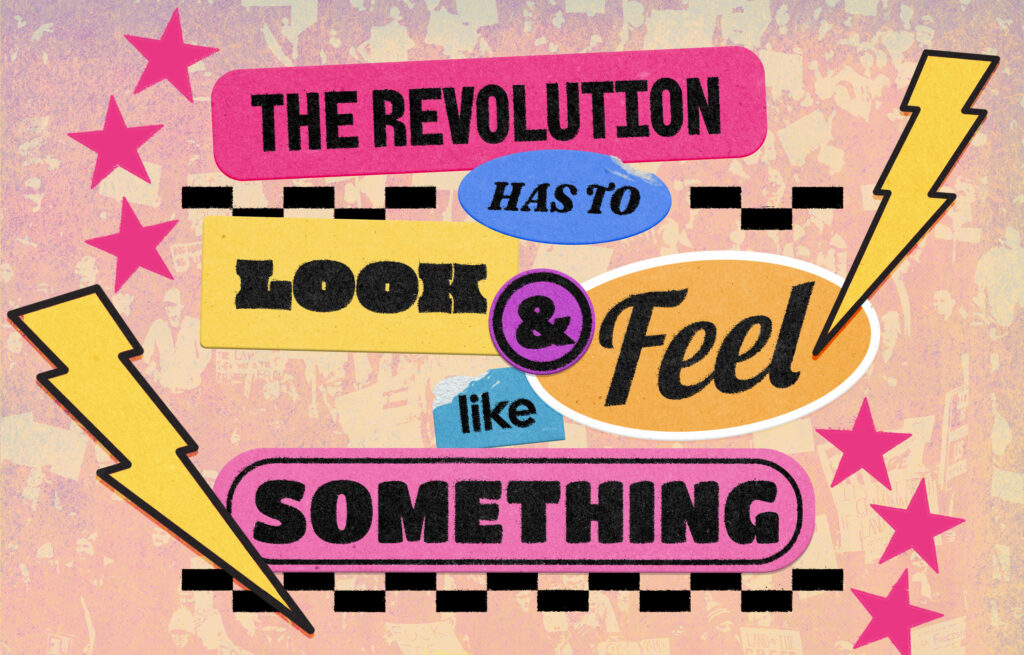
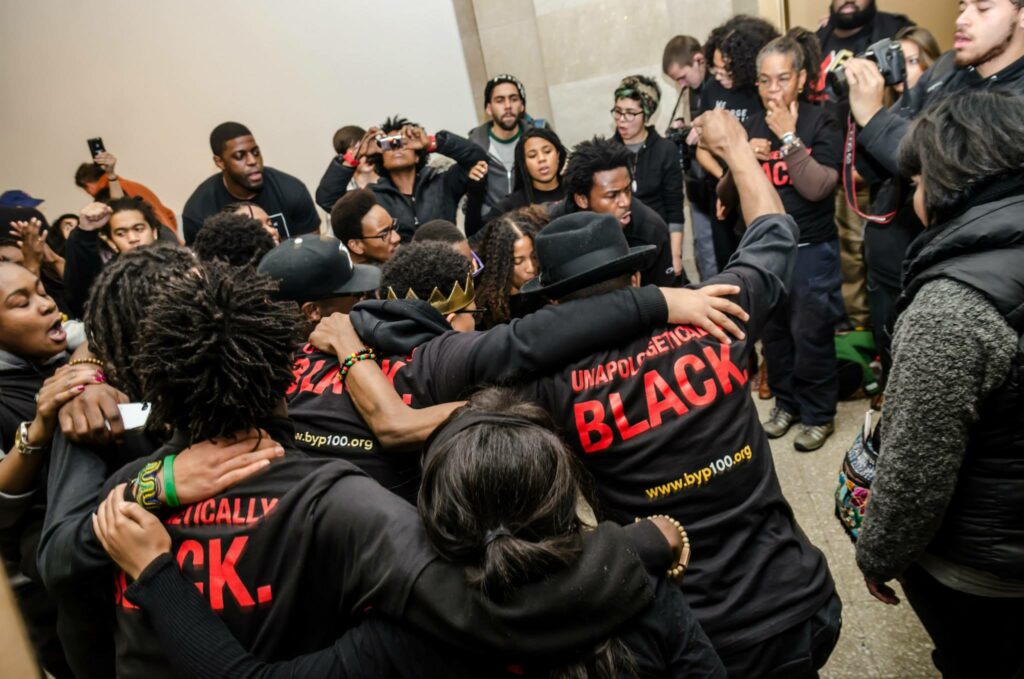
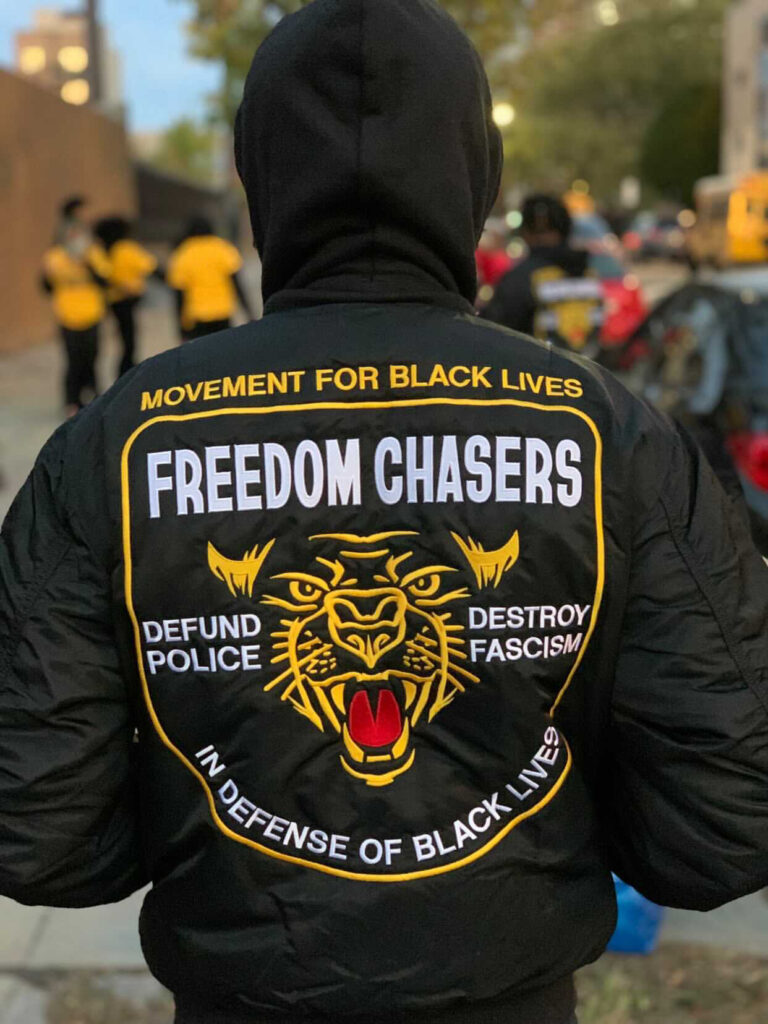
For over a decade, designer, organizer, and cultural engineer Fresco Steez has helped shape the visual language of Black liberation movements. From the Movement for Black Lives uprisings to election protection campaigns and political organizing efforts across the country with BYP100, Fresco has used fashion, art, and pop culture to treat design not simply as branding, but as infrastructure for movement building and people power.
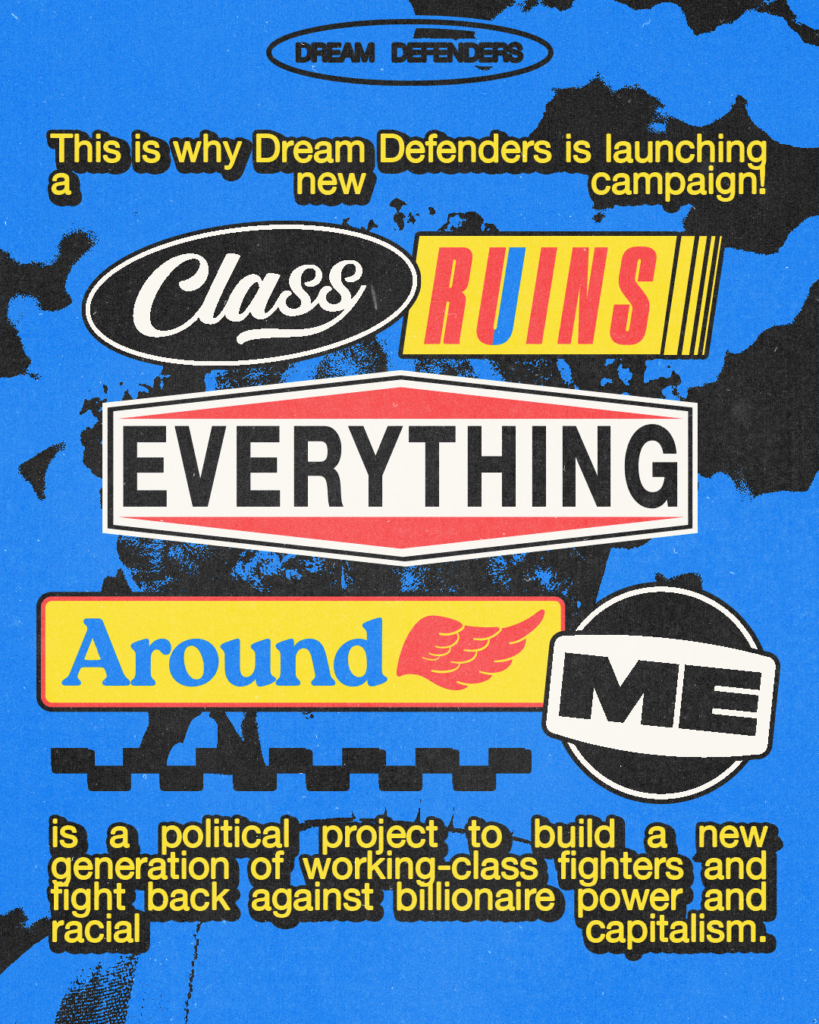
Under the tutelage of Fresco as Communications Director, Dream Defenders has built a narrative campaign–Class Ruins Everything Around Me–that fuses aesthetics, class politics, and the Black radical tradition in a timely fight against billionaires and big corporations. We had a rich conversation about Dream Defenders’ narrative campaign and organizing strategy more broadly. I’m excited to share it with you.
This interview has been edited and condensed for clarity.
Organizing Lineage
Jess St. Louis: What do you want people to know about you and your background in organizing?
Slow media for fast times. Sign up for our newsletter.
Fresco Steez: I have been doing community organizing work for the past two decades. I started on the south side of Chicago when I was 14 years old. I have done or engaged many different modalities and facets of community organizing. But my purpose and my passion is designing. Designing things for social movements and creating visual iconography and identity that is appealing, that enhances their messaging and enhances how folks are able to get across what they believe in, who they are and why folks should join them.
But when we sit down to send people an email about our work, we say: “It’s time to get formal. It’s time to get corporate. Boring stories, activate.”… I have no incentive to read this besides my willingness to care about an issue.
JSL: What brought you into the movement at 14?
FS: I was in Chicago, we have these after school programs, and I signed up for a puppet making class and soon found out that the puppets that we were making were for May Day, of course. That was my entry point. And I think at 14, I stuck around [the movement] because I was seeing students get pushed out of school.
And then because they were being pushed out of school, they were turning to the street economy, hustling, all of these different things to make ends meet. It felt like we were in school and nobody was asking: “Do you have food at home to eat? Do you have heat on? Do you have light, electricity?” I felt like I was watching The Hunger Games as a kid in school. People would get suspended and then just never make it back to school. I think that’s what made me stick around for organizing and got me curious and interested in what this could be and what this could look like.
JSL: What led you to do the work you are doing now?
FS: I had this arc: I did the traditional organizer path, but at some point, I got back to my roots. My mom was an artist and early childhood education teacher. I learned everything in my formative years through art. At some point I was like, “People are not moved by our paragraphs and our emails and our press releases and our petition copy and things like that.”
A graphic designer I worked with said, “movement folks are trying to pack a design with as much as possible visually for credibility. But the litmus test is: could this design be on the side of a bus passing a bus stop? Could the person get the message as that bus was moving? If you can’t, then it’s unsuccessful.” How do we build things that persuade people that are as simple as possible and get people curious enough to get them to the front door with the organizer to hear more?
Theory of Change
JSL: I think you talked a little bit about what’s led you to a theory of change that that political struggle should be culturally appealing, if not irresistible. When I hear the word ‘appealing,’ it evokes a felt sense of excitement and longing for me. I’d love to hear more about this.
FS: I feel like a pivotal point from digital organizer to experimenting with design was thinking about the emails that we send to people, trying to organize them around an issue. For some reason, like we can have beautiful marches, people do street theater, people experiment with all these different creative modalities and all these other aspects of organizing work.
Most of the moments when I have seen our ideas fail is when they’re forced down people’s throats. When I’m talking to organizers, I talk about the Thanksgivings where we have gathered, when the family has spent two days on the meal, and then we’ve ruined it with our zealous shaming at the table–when it was their only day off, their only weekend together. Nobody wants to be around that.
But when we sit down to send people an email about our work, we say: “It’s time to get formal. It’s time to get corporate. Boring stories, activate.” And it’s like, “No, I’m leaving to go to the next email that at least is offering me the buy one get one free discount for the weekend.” I have no incentive to read this besides my willingness to care about an issue.
How can we pull on the radical traditions of our ancestors, of generations of political movement before us–from the work of Emery Douglas, Minister of Culture of the Black Panthers, to the artists featured by Tricontinental Magazine–and actually create things that feel appealing?
I think that we have to do world-building on behalf of our political movements, so that when our communities see the work that we’re doing, they feel reflected. They say, “Oh, that’s me. I feel connection. I feel my history, my upbringing, my inside jokes reflected by the thing that I’m engaging with from this organization. They understand who I am, what I might be afraid of, what I might love, who I might trust. I could belong here and feel less alone.”
JSL: That makes me think of Marta Harnecker’s call for those of us in movements to convince people of our ideas instead of imposing them.
FS: Most of the moments when I have seen our ideas fail is when they’re forced down people’s throats. When I’m talking to organizers, I talk about the Thanksgivings where we have gathered, when the family has spent two days on the meal, and then we’ve ruined it with our zealous shaming at the table–when it was their only day off, their only weekend together. Nobody wants to be around that.
The design work, the narrative strategy work that I am deeply invested in is creating openings, entry points of curiosity that get people in the room or get people to consider a different opinion and hope. And then trusting organizers to take it from there. I think that we have to get a lot looser, a lot less rigid, in order to create those openings and meet people where they’re at.
JSL: Yes! I often see us seeing our people’s contradictions as a problem to solve or to shame them out of versus opportunities where we can invite them in further.
FS: I reference BOLD (Black Organizing for Leadership and Dignity) talking about organizers treating things as problems that need solving versus things that are dilemmas, where there’s no one answer, it is just, you figure out how to navigate a dilemma. It’s not something that you’re going to solve.
Class Ruins Everything Around Me
JSL: I’d love to hear more about the campaign you’re running with Dream Defenders.
FS: The campaign is called Class Ruins Everything Around Me. It is a political project to activate and organize folks into understanding themselves as working class and identifying who the ruling class is and how these billionaires are controlling everyday aspects of their livelihood. We believe that the most important thing right now is to organize people around their understanding of their class positioning in this country and getting them to approach capitalism as inherently racialized in America.
This campaign is a political effort to try to get folks to understand that they are the new working class. That we have more in common with wage workers, with the folks that we might unspeakably understand as a failure of the American dream than we do with billionaires.
JSL: That makes me think about how sometimes when I talk to folks in my organizing work, people are like “I’m not a billionaire or a millionaire, but what if I could become one? I don’t think we should tax the rich.”
FS: This idea that you can work yourself out of poverty in America or you can work yourself out of your class status, that being a part of the myth of the American dream.
When I talk to those people. I know they’re saying they want to be a millionaire and it feels real. But to those people: I don’t think you want to become a millionaire. I think you want your grocery bill, your utilities, your housing, and all of these things to be stable, no matter what, for the foreseeable future so you could spend your life and your time doing things that you want to do: building memories, contributing to positive things, following your passion and your joy; not working to death for a living.
That’s only possible if we transform the structure, if we dismantle racial capitalism and create economic structures for our communities that make sure that all of us thrive.
We are able to identify capitalism and name it as racial capitalism, but are less able to name it as a gendered capitalism. The archetypes of gender were anchored by chattel slavery and people’s ability to produce based on gender. Capitalism and our class experience informs how people understand gender and your gender shapes your class experience.
JSL: What are the big lessons you’re learning from the campaign?
FS: I have been noticing that people have an unspoken stigma around the working class label. Do we need to create something different for newer generations of adults to identify with, or is it possible to organize them into feeling belonging with being working class?
Because when I say working class–they say, “Oh yes, we have to fight for and empower those other people,” And I’m trying to say, “No, working class is you and me.”
This campaign is right on time for this dystopian future that we’re living in. Everybody–from the progressive hipsters to the tradwives to the Make America Great Again bros–is obsessed with nostalgia and with cosplaying the working class archetypes that folks grew up with.
And I feel like maybe three or four years ago, it was just hipster white boys in Bed Stuy and Brooklyn buying Carhartt. Now, everybody has a Carhartt or Dickies work jacket and has never done any carpentry in their life beyond putting together that IKEA set.
Building design around that working class iconography is just in a perfect time, as that is what is catching people’s attention–and can help us pivot or offer a message that gets them curious about their underlying beliefs. There are some design trends that if we are able to build out and have the capacity to tap into, we open ourselves visually to the potential organizers, members, and audiences that are primed to take action.
Choosing To Lead For Working-Class Majorities As Trans People
JSL: I’ve been wrestling with this question of building pro-trans, pro-Black and pro-feminist majorities rooted in class-facing organizing. Both of us are in different organizations and we’re also both trans leaders who are choosing to take responsibility for this big-ass task of cultivating a working-class politics across difference that fundamentally transforms the structures that we’re up against. What have you been learning about what it has meant for you to step into that visionary and audacious form of leadership in this time?
FS: I think it has called me to interrogate a lot of things around gender. I don’t know if that’s the answer, but as a trans person organizing and doing cultural organizing work and thinking about organizing inherently, I think about what does it mean to be building power and what are all the things and how do you maintain and navigate building power responsibly?
I think about Dream Defenders talking about race and talking about class. How are we talking about gender? We talk about racial capitalism and class is racialized in America. But a question I think a lot about is, “Is class gendered in America?”
We are able to identify capitalism and name it as racial capitalism, but are less able to name it as a gendered capitalism. The archetypes of gender were anchored by chattel slavery and people’s ability to produce based on gender. Capitalism and our class experience informs how people understand gender and your gender shapes your class experience.
How do we talk about capitalism being informed by these different harmful structures–racism, gender-based oppression–without getting so abstract and in the weeds?
JSL: Yes! I often talk about it as racial and patriarchal capitalism. I’ve found it helpful as a way to talk about gender in relation to the broader work we’re up to and the source of the problems we face.
Returning to the question of being a trans leader in my organization, when I organize trans people inside of my organization, I often tell them, this organization is mostly not trans people. This organization is how I see the vehicle for our liberation taking place. Not that we don’t have our trans spaces to connect and reflect shared experience. But we shouldn’t conflate that with the formations that we need to build power.
FS: When talking about problems to solve versus dilemmas to navigate, one of my most basic examples to give people is the value and belief to meet our people where they are versus, like, the value that we want to create a safe space where we will not tolerate any type of problematic behavior.
Like, of course, we’re not talking about sexual violence, but we are talking about some of the people repeating some of the tropes and some of the propaganda that they have been fed over time because they are at the beginning of their journey of unlearning. We have to experience the worst of that at the very beginning.
And is that a problem? And like posing, “Do you have a solution to that problem that we can execute in this lifetime that isn’t existential, that doesn’t spiral us into existential questions? Or is it a dilemma that we figure out how to navigate?”
Dream Defenders is one of the last standing Black-led political formations of the movement that started post-Trayvon Martin. And it is deeply important that we are able to sustain the lifetime of our different movement containers.
JSL: Exactly. And like, how do we make it compelling to navigate it with us?
FS: That is the question. That brings me back to Dream Defenders. I remember their tagline that made me so curious about them: “Can we dream together?” Like, not. “Can I change or transform the dreams that you’re having at night? Or can I stop you from sleeping?” But “Can we dream together?”
Closing Thoughts
JSL: Any final thoughts you want to share?
FS: Dream Defenders is one of the last standing Black-led political formations of the movement that started post-Trayvon Martin. And it is deeply important that we are able to sustain the lifetime of our different movement containers.
If you don’t have a political home, come see if Dream Defenders is the right fit. If you are looking for a space to give resources, Dream Defenders as a container needs to sustain and fight in a political period that is undermining and imploding every political container that we have. So just consider and think about Dream Defenders.
Did you enjoy this article?
Becoming a member is the best way to ensure we keep publishing articles that meet the moment. Memberships start at just $5 a month and come along with a variety of other perks; join us today.